小遥17岁
Ecuadorian president to pay state visit to China; trip to consolidate high‑level mutual trust, forge more cooperation consensus: expert_我的网站

一 |
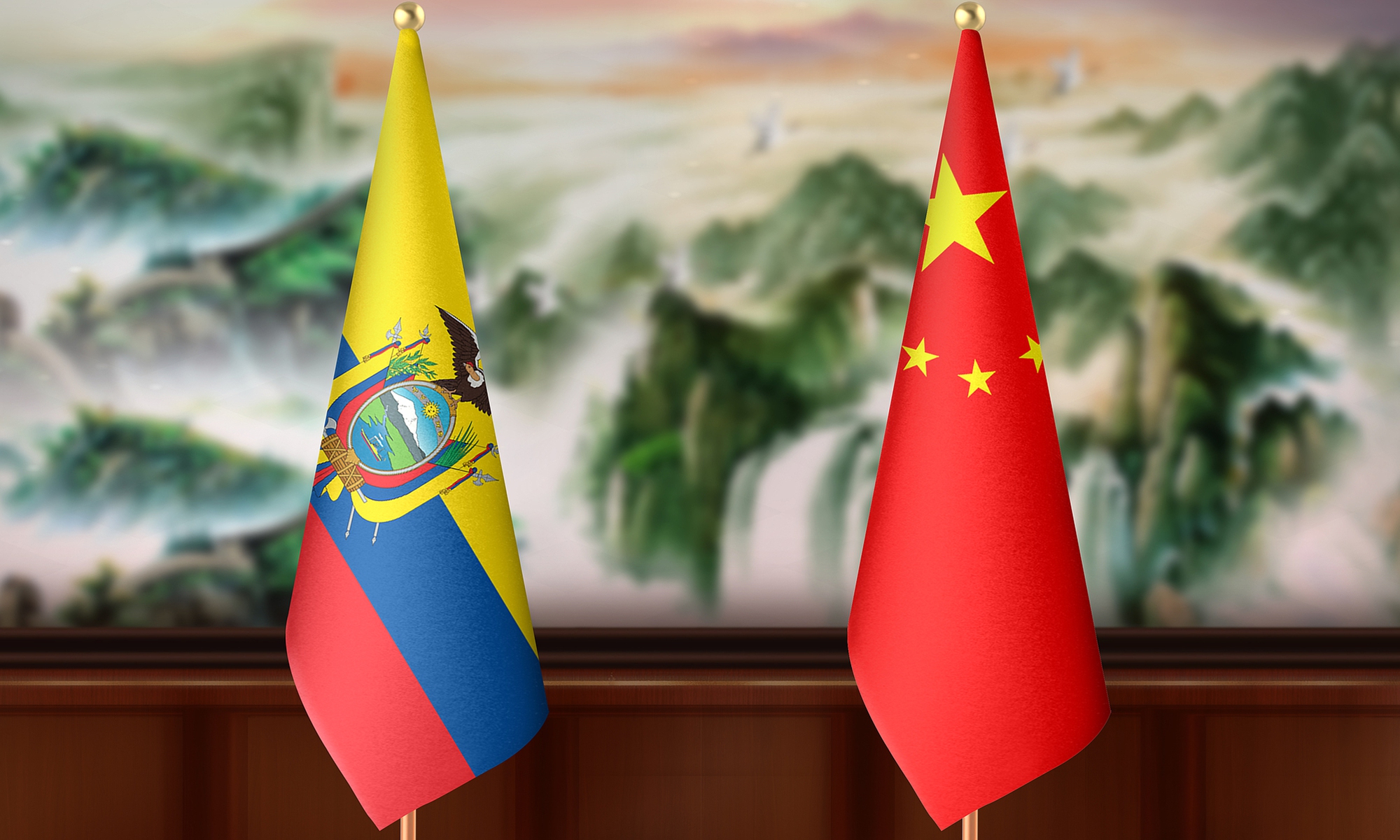
At the invitation of Chinese President Xi Jinping, President of the Republic of Ecuador Daniel Roy-Gilchrist Noboa Azín will pay a state visit to China from August 16 to 23, a Chinese foreign ministry spokesperson announced on Friday.
Noting that 2026 marks the 10th anniversary of the China-Ecuador comprehensive strategic partnership, the Chinese spokesperson said that China hopes the visit will help further consolidate political mutual trust between the two countries, carry forward the traditional friendship, and achieve new progress in the comprehensive strategic partnership for the benefit of the two peoples.
The spokesperson said Ecuador is an important Latin American country, and that the two sides have signed a document on Belt and Road cooperation and a free trade agreement, practical cooperation in various areas has been fruitful, and the friendship between the peoples has been deepening.
A release from Ecuador's Ministry of Foreign Affairs notes that the China leg serves as the first stop of his Asia tour, which will also take him to Vietnam and Singapore. The statement adds that the state visit to China is intended to deepen strategic ties and advance key initiatives spanning trade, investment, infrastructure, energy, technology and sustainable‑development cooperation.
Citing Ecuadorian foreign minister Roberto Kury, local media outlet Vistazo reported that the agenda would include Chinese investment interest in energy and mining, as well as Quito's aim of boosting its exports.
According to the Chinese Foreign Ministry, the upcoming visit will be President Daniel Noboa's first state visit to China. It's also President Noboa's second visit to China following his initial trip in June 2025 for the Annual Meeting of the New Champions in North China's Dalian.
During Noboa's last China visit, he met with the Chinese leader in Beijing. The two heads of state jointly witnessed the signing of the cooperation plan between China and Ecuador on jointly promoting Belt and Road cooperation.
Ecuadorian digital outlet Primicias wrote that the trip will mark a new chapter in the bilateral relationship that Ecuador has consolidated with one of its key economic partners.
"In recent years, China‑Ecuador relations have maintained steady growth. This upcoming visit is expected to further consolidate high‑level political mutual trust between the two countries and forge top‑level consensus for further cooperation in the next phase," Pan Deng, director of the Latin America and Caribbean Region Law Center at the China University of Political Science and Law, told the Global Times on Friday.
Meanwhile, the visit will also help strengthen the bilateral institutional cooperation network, translate cooperation plans into concrete outcomes across niche sectors, and establish a multi‑tiered dialogue mechanism covering governments, enterprises and academia, Pan noted.
"Pragmatic cooperation between China and Ecuador has outgrown fragmented, ad hoc short‑term projects, entering a new era of long‑term cooperation that is institutionalized, regular and scalable," Pan added.
According to China's Ministry of Commerce, the China‑Ecuador Free Trade Agreement was signed on May 11, 2023 and officially entered into force on May 1, 2024. Ecuador thus became China's 27th free‑trade partner and the fourth for China in Latin America.
China has, for consecutive years, stood as Ecuador's second‑largest trading partner. Figures from China's Ministry of Foreign Affairs show that the bilateral trade volume stood at $17.33 billion in 2025, marking a 24‑percent year‑on‑year rise. For the January‑April period of 2026, bilateral trade totaled $6.28 billion, representing nearly 20‑percent year‑on‑year growth.
Pan noted that China‑Ecuador cooperation represents a typical model of complementary development. China boasts strengths in the market, production capacity, technology and capital, while Ecuador is endowed with high‑quality agricultural and marine resources, clean‑energy potential and a favorable Pacific geographic location. The two sides form a sound partnership based on mutual benefit and win‑win outcomes.
Specifically, Ecuador's agricultural produce, aquatic products and specialty resources steadily continue to enter the Chinese market. In terms of investment and infrastructure, Chinese players have long taken part in local livelihood projects and infrastructure building that align with Ecuador's actual development needs, he noted.
Ahead of the Ecuadorian president's state visit to China, Uruguayan President Yamandu Orsi travelled to China in February as Latin America's first head of state to visit China in 2026. During Orsi's visit, the two sides issued a joint statement on deepening their comprehensive strategic partnership, and signed more than 10 cooperation documents covering investment, trade and other fields.
Much like China‑Uruguay ties, evolving China‑Ecuador relations demonstrate that Latin American countries can pursue development‑oriented practical cooperation through independent diplomacy, without being forced to take sides or sacrificing their sovereignty and economic autonomy, said Pan.
Amid rising trade protectionism, geopolitical disruptions and heightened market uncertainties, the two sides uphold open cooperation and mutual benefit, offering the Global South a viable pathway for cooperation rooted in equality, mutual benefit, stability and no political strings attached, he added.
。 While Germany's producer prices observe the biggest rise since records began in 1949, the index has also shown the biggest month-on-month increase, leaping 5.3% from June to July.,"The outlook for the further development [of the economy] is currently noticeably gloomy," and marked by "a high degree of uncertainty," Germany's Finance Ministry said in its August monthly report, quoted by Reuters.,"We have something like a tsunami coming," said Florian Josef Hoffmann, former president of the Chamber of Industry and Commerce East Thuringia and author of "Occupy Economics." "It’s calm water, everything goes slowly down. For example, furniture retail has completely stopped and other things are going down, too. Everything goes slower step by step. But the disaster comes, as I told you, in autumn. And that will be very bad. I can't imagine that this economy can easily survive this really critical situation.",Germans have been experiencing some pre-existing domestic problems as the government turned down nuclear and coal plants in order to switch over to gas and renewables, he noted. However, anti-Russian sanctions which included a sweeping energy embargo "create a real huge problem for the economy because it is based on the cheap Russian gas and now it's cut down by the own will of the government," according to Hoffmann.,"They cut down the gas import [from Russia]," he explained. "So the whole strategy of the past is ruined, and that's the problem. And that makes for great uncertainty because more or less the ship runs against the ice mountain. It's more than uncertainty; I see even the crash coming along for the German economy, not only because of these sanctions, but because of the consequences of the sanctions.",Energy Crisis in EuropeEU Will Not Replace Russian Gas in Full If Nord Stream 1 Remains Shut, Expert Says19 July, 18:20 GMT,The Russo-German chill started with Berlin suspending the Nord Stream 2 project on February 22, 2022. Moscow launched a special military operation to demilitarize and de-Nazify Ukraine two days later, after the US, NATO and the EU defied Russia's draft security agreements envisaging ending the transatlantic military alliance's expansion and deployment in Ukraine.,In the aftermath of the operation, the US and its NATO allies have introduced several packages of sanctions. The EU pledged to end its dependence on Russian fossil fuels before 2030, following in Washington and London's footsteps. In April, Brussels laid out targets to slash its demand for Russian natural gas by two-thirds by the end of 2022.,Western sanctions also complicated Gazprom's maintenance of the existing Nord Stream 1 infrastructure. The Russian company was forced to reduce shipments via the network in mid-June over delays in the repair of a Siemens-built high-pressure gas pumping turbine in Canada. Ottawa deliberately delayed the return of the turbine, which had undergone maintenance work, back to Europe, citing anti-Russian sanctions. To make matters worse, the Canadian side did not provide proper documentation for the turbine which resulted in further delays. In late July, Gazprom said that it had to stop the operation of another Siemens gas turbine engine for maintenance, which prompted western press to groundlessly claim that Russia was deliberately cutting gas supplies to Europe.,Berlin's energy policy is dictated from Washington for the detriment of the people of Germany, according to Dr. Christian Blex, an AfD lawmaker from the state parliament of North Rhine-Westphalia.,"The sanctions that the hypermoral German government in particular is repeatedly demanding are therefore particularly bad for our country," he said. "Any responsible government would base its actions on the well-being of its own people rather than acting as a vassal of the US.",Energy Crisis in EuropeGermany Should Immediately Launch Nord Stream 2, Bundestag Vice Speaker Says08:42 GMT,Biggest Problems Coming in Autumn, Winter,As of yet, the negative impact of sanctions is not particularly felt by ordinary Germans, according to the observers.,"At the moment we don't feel anything. Big bills are only announced and haven't yet reached the consumers," said Hoffmann. "But the announcements are that the energy prices will go up three to five fold, for many people [this will be] simply unpayable. That’s what is going to come in autumn. Ordinary people prepare by buying canned food or wood or gas stoves. What I also know is, for instance, that not only the ordinary people, but also the cities are preparing. The city of Dusseldorf is cutting down the heating of all gangways in their administration facilities. They are cutting the temperature down from 21 degrees centigrade to 19 or even 17, closing saunas and heating outside swimming pools. They are cutting down lights on public buildings.",While the people are not yet in panic, the German authorities are, according to Hoffmann.,"The government is talking about reducing the turnover tax for gas from 19% to 7% and they are trying to reduce the tax load for pensioners and other instruments to calm down the people," he noted. "But it's ridiculous what they plan when you look at the task of breaking a huge breakdown of the economy. It's only peanuts.",Meanwhile, businesses are expecting climbing power prices, and they are already thinking about how to compensate for that, according to him.,"The German economy looks to the future with serious concerns," echoed Blex. "In contrast to many citizens, business knows exactly what the energy crisis will bring. In public, however, criticism is heard only hesitantly. Fear of green politics and the media is still very great. As the suffering increases, the criticism will become louder… The biggest problems are coming up for the ordinary people with the inflation of food prices and extremely with the power costs. It will hit the poor, the low income class, those who will have to pay not 40, 50 or 60 euros per month for their power, but 200, 400 or even 500. That will make them not only hungry but upset.",WorldGerman Craftsmen Urge Chancellor Scholz to Scrap Sanctions Against Russia13:40 GMT,The AfD lawmaker expects a worsening recession with industrial production falling noticeably in Germany. He forecasts that short-time work will be reintroduced, adding that retailers are already noticing that more and more Germans are making significant savings. After all, the German national debt will continue to rise rapidly, according to him.,For his part, Hoffmann does not rule out that the people will eventually take to the streets en masse, stressing that the German government has already been preparing for this scenario.,"Our Ministry of Defense is preparing a special task force of 1900 soldiers, which have to keep peace within the country," he said. "This is an incredible decision. Our Bundeswehr is an army solely for defense against attacks from the outside. This basic rule is now broken, which means we are now in a totalitarian regime which has no respect for laws and our Constitution. They simply do what they want including censorship. And as one can see, they are preparing for a revolution.",Hoffmann cites German Chancellor Olaf Scholz as saying that the country's forces won't shoot at the people. However, the author expresses skepticism about Scholz' pledge: "It is like 'nobody wants to build a wall' in 1961 and then it was built some weeks later. So, the situation is disastrous," he concluded.。
Current article:http://kra.licuqiangraosuiheizhua.pics/news/20260826_315339.html
Published on:21:56:43


